Integrated design for quality improvement and cost reduction in the semiconductor industry.
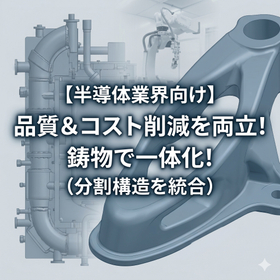
Combining complex split structures into one casting. A thorough explanation of the benefits of "integrated molding" that dramatically reduces assembly labor and its differences from other methods.
In high-precision semiconductor manufacturing processes, many complex structural components such as piping and brackets are used. Traditionally, these have been joined using a "split structure" involving multiple parts welded or bolted together, which presents challenges such as "variability in precision" and "manufacturing labor." The solution to this is Hinode's "integrated molding through casting." ■ Benefits of Integration - Reliability: Eliminates joints, minimizing the risk of leaks. - Cost: Significantly reduces welding assembly and individual part processing steps. - High Precision: Integrated molding resolves misalignment caused by cumulative tolerances between parts. ■ Comparison of Methods and Selection Points - Welding: Suitable for prototypes, but quality variability and labor are issues during mass production. - Integrated Casting: Offers overwhelming advantages in total cost and reliability during mass production. The Hinode Group provides consistent support from material proposals to shape optimization design, contributing to the enhancement of equipment value.
- Company:日之出水道機器 産業機械マーケティング
- Price:Other